
Occupational therapy tools help children build essential physical, sensory, and cognitive skills. These therapy tools improve coordination, attention, balance, and fine motor development. Moreover, they support sensory regulation and encourage active participation during therapy sessions.
Children with developmental delays, sensory challenges, or motor difficulties benefit greatly from these occupational therapy equipment and activities. Therefore, therapists and parents often use these tools to create engaging and effective therapy sessions.
1. Therapy Swing for Sensory Regulation and Balance
A therapy swing is one of the most popular occupational therapy sensory tools. It helps children improve balance, coordination, and body awareness. In addition, it provides calming sensory input for hyperactive children..
Benefits of Therapy Swings
- Improves balance and posture
- Enhances sensory processing skills
- Promotes body coordination
- Helps children stay calm and focused
Therapy swings also support vestibular development. As a result, children feel more secure during movement activities.
2. Balance Board to Improve Coordination
A balance board strengthens core muscles and improves posture control. Furthermore, it encourages children to maintain stability during movement.
Benefits of Balance Boards
- Improves body balance
- Strengthens core stability
- Enhances concentration levels
- Supports posture development
Occupational therapists often use balance boards during movement exercises and sensory integration therapy sessions.
3. Therapy Ball for Strength and Posture
A therapy ball is a large exercise ball used in occupational therapy activities. It supports muscle strengthening and improves overall posture.
Benefits of Therapy Balls
- Improves body strength
- Encourages better posture
- Provides sensory stimulation
- Supports movement coordination
Children also enjoy bouncing and stretching activities with therapy balls. Therefore, therapy sessions become more engaging and interactive.
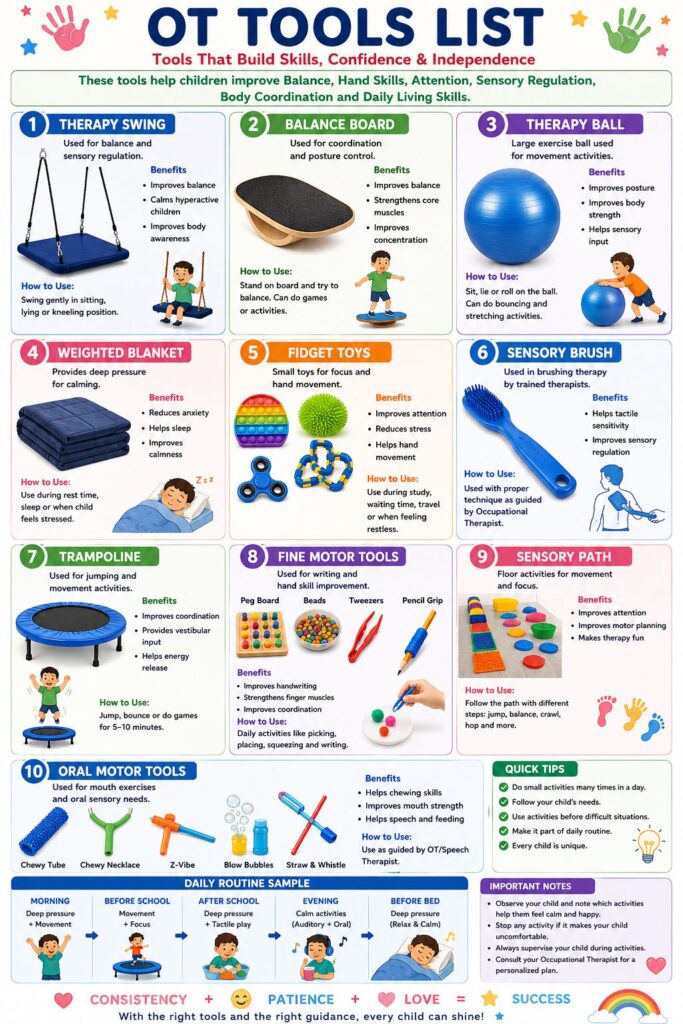
4. Weighted Blanket for Anxiety and Calmness
Weighted blankets provide deep pressure stimulation. Consequently, they help children feel relaxed and secure.
Benefits of Weighted Blankets
- Reduces stress and anxiety
- Improves sleep quality
- Promotes emotional calmness
- Supports sensory regulation
Many therapists recommend weighted blankets for children with sensory processing difficulties or attention challenges.
5. Fidget Toys to Improve Focus and Attention
Fidget toys are small hand tools designed to improve concentration and reduce stress. Additionally, they encourage hand movement and sensory engagement.
Benefits of Fidget Toys
- Improves attention span
- Reduces nervous energy
- Encourages hand coordination
- Helps with sensory needs
These toys are especially useful during classroom activities and therapy sessions.
6. Sensory Brush for Tactile Therapy
A sensory brush is used in brushing therapy by trained occupational therapists. It helps children manage tactile sensitivity and sensory responses.
Benefits of Sensory Brushes
- Supports sensory integration
- Reduces tactile defensiveness
- Improves body awareness
- Helps regulate sensory responses
Therapists usually include sensory brushing in structured therapy programs for sensory processing support.
7. Trampoline for Vestibular Input and Coordination
A trampoline provides movement-based therapy that improves coordination and balance. Moreover, children enjoy jumping activities because they release excess energy.
Benefits of Trampolines
- Enhances motor coordination
- Provides vestibular sensory input
- Improves body control
- Encourages physical activity
Mini trampolines are commonly used in pediatric occupational therapy clinics and sensory gyms.
8. Fine Motor Tools for Handwriting Skills
Fine motor therapy tools help children strengthen finger muscles and improve hand coordination. These activities support writing and daily living skills.
Common Fine Motor Therapy Tools
- Peg boards
- Beads and threading activities
- Tweezers and gripping tools
- Pencil grips
Benefits of Fine Motor Activities
- Improves handwriting skills
- Strengthens finger muscles
- Enhances hand-eye coordination
- Develops precise hand movements
These tools are essential for children struggling with writing, grasping, or buttoning tasks.
9. Sensory Path for Movement and Focus
A sensory path includes floor-based activities designed to improve focus and motor planning. It combines movement with interactive learning activities.
Benefits of Sensory Paths
- Improves concentration
- Encourages active movement
- Supports motor planning skills
- Makes therapy sessions enjoyable
Schools and therapy centers often use sensory paths to help children stay engaged and regulated throughout the day.
10. Oral Motor Tools for Feeding and Speech Support
Oral motor tools strengthen mouth muscles and improve oral sensory development. Therapists use these tools to support feeding and speech therapy activities.
Benefits of Oral Motor Tools
- Improves chewing ability
- Strengthens oral muscles
- Supports speech development
- Helps with feeding challenges
These tools are highly effective for children with oral sensory difficulties or delayed speech development.
Why Occupational Therapy Tools Are Important for Child Development
Occupational therapy tools support physical, emotional, and sensory development in children. Furthermore, they improve independence and confidence during everyday activities.
Therapists carefully select these tools based on each child’s unique needs. As a result, children develop stronger motor skills, better focus, and improved sensory regulation.
Parents and educators can also use these occupational therapy activities at home or in classrooms. Therefore, children receive continuous support for their developmental growth.
Conclusion
Occupational therapy tools play a major role in improving sensory processing, coordination, attention, and fine motor development. From therapy swings to oral motor tools, each item supports specific developmental goals.
Using the right occupational therapy equipment helps children build confidence while improving essential life skills. Consequently, therapy becomes more effective, enjoyable, and engaging for children of all ages.